Monthly Archives: June 2010

The 2010 American Columbo Census

Last week I finished my annual American columbo census.  Every year in June, I check up on a marked population of American columbo (Frasera caroliniensis) plants in the oak woods near where my wife and I live in Oshtemo Township. Here in southwest Michigan, columbo was an oak savanna plant. I suspect that today this township, which was mostly savanna at settlement, has more columbo remaining than anywhere else in Kalamazoo County.

Rosettes of American columbo. Last year's dried flowering stalk from another plant is the diagonal between the two rosettes. Photo by Richard Brewer

Rosettes of American columbo. Last year's dried flowering stalk from another plant is the diagonal between the two rosettes. Photo by Richard Brewer

The usual way a person encounters columbo is to find one or a group of its basal rosettes.  These look rather like the basal rosettes of the well-known biennial weed common mullein except that the elongate oval leaves of columbo are thin, smooth, and green instead of thick, furry, and silvery like mullein.

Occasionally one sees a columbo flowering stalk.  It’s an impressive sight, often six or even eight feet tall, smooth and green, with several whorls of leaves and a great number of branches in the upper whorls bearing dozens or hundreds of small flowers on slim stems.  Though small, the flowers are striking looking, symmetrical with greenish-white, purple-dotted petals.  Long ago, in southern Illinois, when my friend Kenny Stewart and I found a blooming columbo, he described the flower as looking like a botany text book diagram of flower structure.  Calyx, corolla, stamens, a pistil, all the parts are laid out just as they should be, plus in the middle of each petal, a fringed nectar-producing gland.

A single flower of Am. columbo. Photo by Richard Brewer

Seven years ago, I decided to follow the fortunes of one patch of 121 columbo plants spread over an acre or so of oak woods. Two other patches of similar size exist several hundred feet away, one to the east and one to the west.   Ralph Babcock, a friend and former student, joined me to spend a day marking each plant by means of an orange plastic flag on a wire.  We gave each plant a number, written on the flag using a marking pen with super-permanent ink, and I recorded each location using direction and distance to landmarks and nearby plants. A little later in the summer, we recorded size and other information about each rosette.

Giving each plant an identifying number allows me to follow what happens to each one individually, like birds in a banded population.  Every June, I check to see which plants are still there and their size and condition and to replace weathered and missing flags.

Am. columbo plant number 52. On 23 June 2009, the rosette was composed of 30 leaves and had a diameter of 54 cm. Photo by Richard Brewer

The census usually takes me four or five days, a few hours each day.  Last year I postponed replacing  fading and tattered flags because I wanted to record what other plant species were within a meter or so around each plant and to note something about the topography and litter depth for each point.  So this year’s census took a little longer than usual because I had to make 39 new flags and renew the writing on many others.

As to the plants in the neighborhood, the big trees are mostly white oak, black oak, sassafras, wild black cherry, pignut hickory, and red maple  A few of the herbs are sweet cicely (which went from flowers to fruit just in the week when I was censusing), white avens ( in flower now), Indian pipe (not quite up yet this year), rattlesnake fern, spotted wintergreen, and lopseed.  There’s a fair amount of poison ivy and Virginia creeper on the ground too, more every year.

Some of the birds I hear singing or calling while I work on the columbo are Wild Turkey (pretty quiet lately), Ovenbird, Wood Pewee, Great Crested Flycatcher, Black-capped Chickadee, Tufted Titmouse, White-breasted Nuthatch, Rose-breasted Grosbeak, Blue Jay, Red-eyed Vireo, and Scarlet Tanager.

Other vertebrates are sparse.  A few days ago, I saw something hop close to one of my points and was able to find it and see the cross on its back.  It was a spring peeper back from the ponds a few hundred yards away, where they were peeping and mating in April.

There are plenty of deer, though less in evidence now than most of the year. The deer do not eat the columbo and also avoid stepping on them.  Of course, the rosettes die back above ground in the winter, leaving the crown of the large taproot just below the soil surface, so the deer have no visual clues of the columbo from fall to spring.  The deer do blunder into the orange flags, occasionally dislodging them and often bending the wires.  Nothing else seems very interested in the columbo foliage either–not the chipmunks, fox squirrels or even insects. Most plants show little or no sign of insect damage.

Of the original 121 plants, 11 have flowered in 7 years.  The plant then dies, just like the second-year mullein plant.  Some columbo have died without ever flowering, but many of the original plants are still alive, reappearing year after year as a basal rosette.

So, American columbo looks like it could be a biennial like mullein, basal rosette one year, flowering stalk the next, then gone;  but it’s not.  I don’t know how long columbo takes from germination to flowering here in the oak woods, but it’s a good many years at best.

Basal rosette of the biennial common mullein. Photo by Richard Brewer

If you’d like a name for plants with life cycles like columbo you could call them long-lived monocarpic perennials. Long-lived perennial monocarp is OK also. You may think you never heard of such a thing, but you have.  Some species of bamboos and century plants (Agave) act pretty much the same way.  Also a few animals–sockeye salmon and the 17-year cicada, for example.

Michigan League of Conservation Voters: Rep. Robert Jones-100, Colony Farm Orchard-0

The League of Conservation Voters is a national environmental group that is best known for its Environmental Scorecard, where the league tallies the pro- and anti-environmental votes cast by our elected representatives.  I’m glad the organization exists; I strongly support the idea that we should know how politicians vote on conservation issues and hold them accountable .

Logo of the Michigan League of Conservation Voters

About a week ago, the Michigan League of Conservation Voters (LCV) produced its Environmental Scorecard for the state legislature’s 2009-2010 session.  The scores were based on 18 bills in the House and 10 in the Senate.  Much of the report  was interesting and informative.  However, there was one serious omission–House Bill 5207.   This bill, introduced by Representative Robert Jones (D-Kalamazoo) and fast-tracked by him through the Commerce Committee of which he was chair, was as strongly anti-conservation, anti-environment, and anti-sustainability as any measure taken up this session.

The bill was not named “House Anti-conservation Bill 5207;” nevertheless, it was straightforwardly a bill to strip the open space/public use restriction from the Colony Farm Orchard, a semi-natural area adjacent to the Asylum Lake Preserve, in order to allow Western Michigan University to develop the site for expansion of its BTR Park.  Perhaps we ought to see the language of the restriction one more time:

“The conveyance shall provide that Western Michigan University may utilize the property solely for public park, recreation, or open space purposes, except that the legislature, by statute, may authorize Western Michigan University to utilize the property for some other public purpose.”

The anti-environment nature of the bill was brought to the attention of Michigan LCV staff by more than one person and on more than one occasion.  The conservation problems with HB 5207 were repeatedly brought to the attention of House and Senate members and the Governor  by letters, e-mails, phone calls, FAXes, personal visits , and e-mailed links to a documentary movie (The Colony Farm Orchard: Here We Go Again by Matt Clysdale) on YouTube.  By means of a couple of dozen published letters to the Kalamazoo Gazette, many news articles, public meetings and presentations of Matt Clysdale’s movie in Kalamazoo and elsewhere, the environmental controversy became widely known.

Nevertheless, the Michigan LCV did not include HB 5207 on its list of environmentally significant votes.

Because of this omission the LCV was able to award Representative Robert Jones a score of 100% and an “Honorable Mention” on its Environmental Scorecard.  As it turned out, 32 state representatives and 11 senators received 100% scores.  All were Democrats.

It is possible that  Rep. Jones introduced HB 5207 without knowledge of its conservation implications, or even its content.  But he certainly knew the problems well before his Commerce Committee took it up, well before the House passed it, and well before the Senate passed it–which was late at night just before the legislature broke for Christmas.

Dozens of people talked with Jones, asking him to withdraw HB 5207 or modify it.  But perhaps they weren’t the right people. They were WMU Environmental Studies students, local conservationists, members of community groups, and ordinary people who think that promises made should be promises kept.

We should note that with this bill included, no legislator would have received 100%.  All the 100% Democrats either voted for it, or took to the hills when the question was called. The only legislators who voted against the bill were two Republicans in the House and one Republican Senator. Clearly, no one in the Michigan legislature deserved a perfect score.  Without knowing how many other serious omissions there were from the list of “environmental” bills, it is impossible to know what the true highest score might have been.

Michigan LCV needs to consider seriously–and then let us know–why HB 5207 was omitted from the list of environmental bills.  Was it simple ignorance on the part of the staff that did the evaluation?  Was a decision made to overlook the anti-environment nature of the bill because WMU was marketing the bill as a job creation measure?  The politicians looked the other way when it became clear that any jobs created would be few and years away.  Perhaps LCV also looked away, afraid it might be seen as putting environment and business in conflict.

I suppose it could even be possible that HB 5207 was seen as too local an issue to be included.  If so, how many other bills of environmental importance might be missing from the evaluation?

But the conservation impact of HB 5207 reaches far beyond Kalamazoo. It sets a precedent for the legislature to tamper with conservation covenants on any land held by the state or state institutions.  What will happen if the Michigan Department of Natural Resources decides that we could get along without a few of our state parks and persuades a friendly legislator to introduce a bill to sell them for development?

A lawyer for a land-owner who wants to get out of a conservation easement that has become inconvenient could be thought remiss if the lawyer doesn’t say, Talk to your local representative.  The rules for conservation easements are just part of a state statute; they can be changed.

The Michigan League of Conservation Voters has some explaining to do.

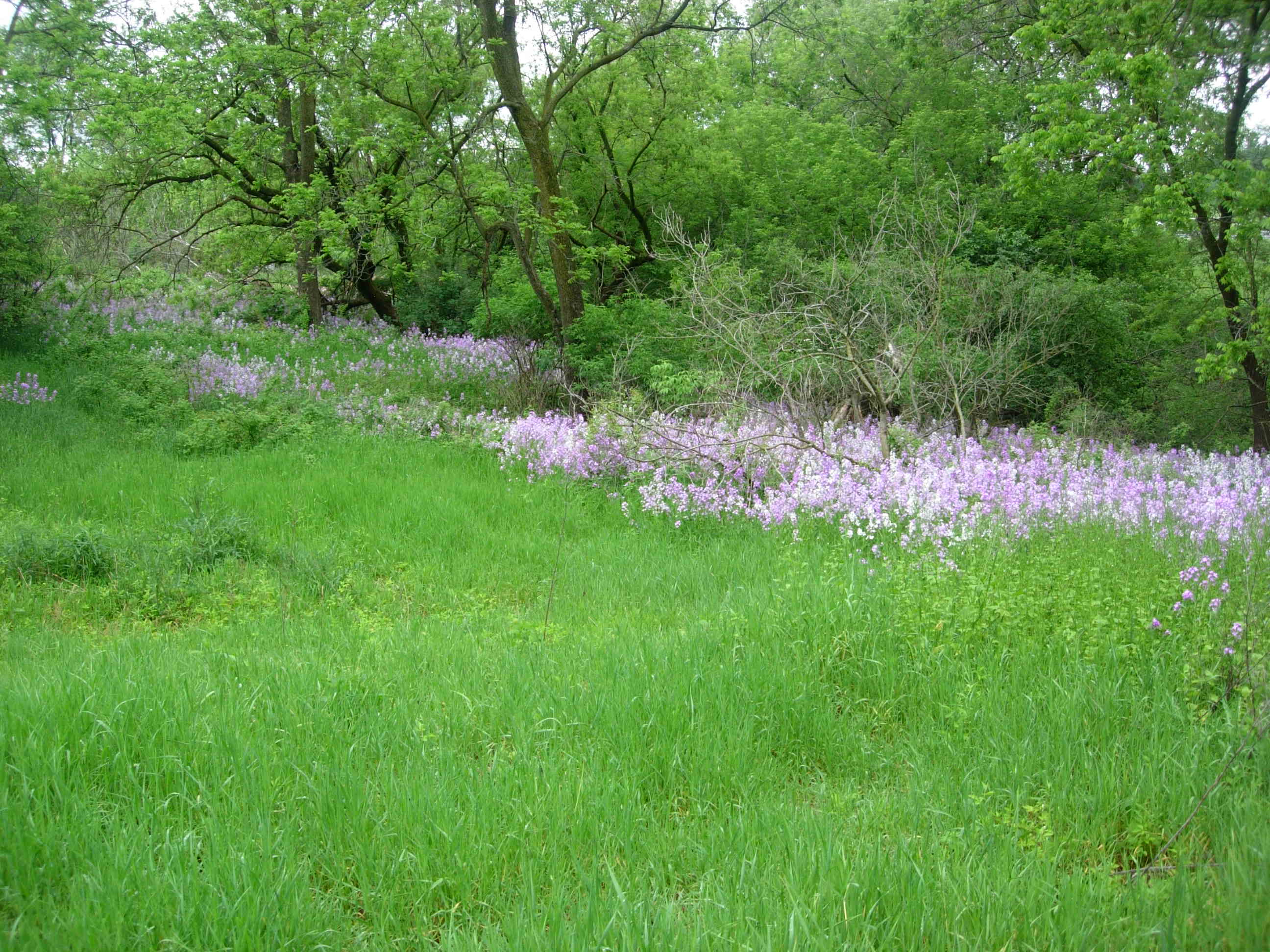
View in Colony Farm Orchard early June 2010. Photo by Richard Brewer