Monthly Archives: December 2009

HB 5207, WMU’s Job Creation Bill Of 2021

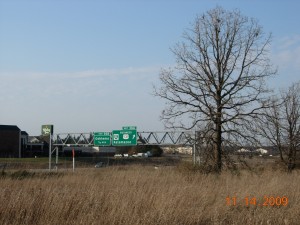
Bur Oak tree with US-131 in the background, early winter, Colony Farm Orchard. Photo by Richard Brewer.

Bur Oak tree with US-131 in the background, early winter, Colony Farm Orchard. Photo by Richard Brewer.

The Michigan Senate passed HB 5207 Friday night 18 December, not long before adjournment.  The bill goes to Governor Jennifer Granholm, who will sign it or veto it.

Curiously, WMU’s lobbyists did not inform the Kalamazoo Gazette that the bill had passed the Senate. When the bill passed the House in September, Greg Rosine was on the phone to the Gazette within minutes.  Not until Sunday afternoon did the Gazette find out what had happened this time.

There were 30 Yeas and 1 Nay.  The yeas were (Democratic Senators in boldface)  Allen – Anderson – Gilbert – McManus – Sanborn – Birkholz – Gleason – Nofs – Scott – Bishop – Hardiman –Olshove – Stamas – Brown – Jacobs – Pappageorge – Switalski – Cassis – Jansen – Patterson – ThomasCherry – Kahn – Prusi – Van Woerkom – Clarke – Kuipers – Richardville – Whitmer – George

Cherry is Deb Cherry, Lt. Governor John Cherry’s sister.

Seven senators were excused and did not vote: BarciaBashamClark-ColemanHunter – Jelinek – Brater – Garcia

The single nay was Alan Cropsey, a conservative Republican born in Paw Paw not far west of Kalamazoo, though now living in Dewitt and representing voters in that region.  His protest over the vote is quoted below:

“Years ago when the land was first transferred to Western Michigan University, it was understood that the land would be used as a green space for that area. I think that Michigan State University actually had it in such a horticultural state that they were doing different studies and research for agriculture and fruit farming on that property. It was understood that it would remain a green space.

“I find it ironic that after a couple of decades that now the use is being changed dramatically. Green space is going away. I just want this body to know that at least there is one true ardent environmentalist left in this august body who is going to stand up and speak out for the plants and animals that are so desperately needed in our urban centers.”

WMU has advertised the bill as a way of creating jobs, and probably many of the senators voting yes took WMU at its word.  The Senator from the Kalamazoo district (20th), Tom George, had made up his mind months ago, and the hundreds of messages he received from citizens didn’t change it.  When interviewed by the Gazette on Sunday, he said,  “I have to look at the big picture….Kalamazoo has another mechanism for attracting new jobs and growth.”

Other Senators, and Representatives before them, said much the same thing.  Probably no politicians, or any of the rest of us, are against jobs.  Many able and willing people are out of work in these hard times.  That’s why it’s particularly disheartening that WMU’s claim that removing the open space/public use restriction will lead to job creation at the Colony Farm Orchard rests on such shaky grounds.

It’s hard to evaluate WMU’s statements about jobs created in the current BTR park because the university provides little supporting data. “No supporting data” comes closer.  It is hard to tell, for example, how many of the current jobs among companies at the BTR were “created” by the park and how many were at employers that simply moved to the park from elsewhere in the region, or are new jobs but ones that would have ended up at some other site in the region except that the tax situation was better at a SmartZone site.

In his Gazette Viewpoint of 23 September 2009 President John M. Dunn stated that “more than 1300 jobs have been directly or indirectly created.”  Numbers of  jobs claimed by WMU fluctuate, but the usual quotes I’ve seen are 645-650 direct and 700 indirect.

In other words, the majority of the 1300+ jobs are indirect. There are various definitions of indirect jobs; roughly, they are new jobs outside the BTR park financed by money spent by park firms and their employees. As the Mackinac Center, a free-market think-tank in Midland, Michigan, has stated, “Estimating indirect job counts is a subjective exercise, and econometricians and accountants with the best of intentions can produce widely varying figures, depending on their assumptions and estimation techniques.”
In the BTR Park, summer 2009. Photo by Richard Brewer.

In the BTR Park, summer 2009. Photo by Richard Brewer.

But all this is nearly irrelevant because, although WMU uses the job creation claim as justification for removing the Colony Farm Orchard’s protective covenant, WMU has repeatedly said that nothing is going to happen at the Orchard site soon.  Most statements have said that the reason for removing the restriction is so that WMU will be ready to spring into action when the BTR is actually full. Currently there are three unsold lots (as has been the case for quite a while), two or more vacancies in already constructed buildings, and a 20-acre soccer facility that is supposed to be converted to BTR park use.

The figure I’ve heard most often from WMU vice presidents is that it would be three years before development would begin, which corresponds to the time said to be needed by Michigan State University to switch their pest insect research elsewhere. Hence, the earliest jobs created at the new BTR Annex on the Orchard property would come on line somewhere around 2013.  Kalamazoo will still need jobs in 2013, unquestionably.  But the compelling need is now.

As everyone knows there are plenty of other suitable sites for a BTR park expansion–if a demand for more BTR space actually exists. WMU owns nearby sites that have no restrictions and no existing MSU lease for pest research.  For that matter, most of them probably have no lead and arsenic contamination as the Colony Farm Orchard very likely has. And, of course, there are city of Kalamazoo brownfield sites that once were contaminated but have been remediated and would be ready to roll when, as, and if there were occupants ready to move in.

Many other features make the Colony Farm Orchard an inappropriate place for expansion of the BTR park. We’ve mentioned the possible soil contamination. The fact that the Colony Farm Orchard deserves permanent protection in its own right and as a functional part of the Asylum Lake Preserve are two more.  The list goes on, but let me mention just the small size of the Orchard property.

Subtracting the land occupied  by the Consumers Energy substation, perhaps 53 acres are available.  The current BTR park is 265 acres.  On this acreage 650 jobs have been accumulated.  This occurred from approximately 2001 to 2009, roughly eight years.  We can get a ballpark estimate of how many jobs might be expected from the development of the Colony Farm Orchard from the proportionality X jobs/650 jobs = 53 acres/265 acres.  I make it 130 jobs, starting from 2013 (that is, in three years) and running to about 2021 (8 years).

It’s worth remembering that most of the time from 2001-2009 was one of the greatest financial booms (or bubbles) in American history, so it could be that 130 jobs for the Colony Farm Orchard parcel in 8 years is too optimistic.

One hundred-thirty jobs is one hundred-thirty jobs, well worth having, nothing to sneeze at.  But consider all the work needed to put this land in condition to develop–bringing in all the utilities, cutting down the trees and otherwise clearing the land, testing for and probably having to remediate lead and arsenic contamination (the remediation consisting of removing several inches of soil within the orchard itself, taking it to a toxic waste dump, and bringing in clean soil), engineering a storm water system, meeting other environmental considerations as strict as–or very likely stricter than–at the original BTR park.  And so forth.

Perhaps picking a larger site with a larger future carrying capacity would be a better idea.  Perhaps a site where some of these problems did not exist or had already been solved would be better.

What will Governor Granholm do? WMU’s This-bill-creates-jobs rhetoric fooled at least some of the Senators.  It’s possible that some weren’t fooled but thought that going along with the dubious claims wouldn’t hurt them; after all, they were voting for job creation.

What will Governor Granholm do? She has a chance to strike blows for keeping promises, for upholding covenants that protect open space and public use, a chance to save land that very much deserves saving.  She has a chance to say to all of us that government and universities should not operate by hiding information and dispensing misinformation. She can strike a blow against cynical manipulation of the public and, for that matter, of the legislature. And in so doing,  she will be striking a blow for conservation, for the environment, and for sustainability.

Contact information for Governor Jennifer Granholm:

Phone: (517) 373-3400
Phone: (517) 335-7858 – Constituent Services
Fax: (517) 335-6863

PO Box 30013
Lansing, MI 48909

Here is a link to an email citizen opinion forum.

Here is a link to the governor’s standard email.

Senate Passes HB 5207; Governor next step

Sticky trap for insects possibly the property of MSU, Colony Farm Orchard, spring 2009.  Photo by Richard Brewer

Sticky trap for insects possibly the property of MSU, Colony Farm Orchard, spring 2009. Photo by Richard Brewer

Friday night, 18 December 2009, between 10:30 and 11:00 PM, not long before adjournment, the Michigan Senate passed HB 5207, which would strip the open space/public use restrictions from the Colony Farm Orchard land, allowing Western Michigan University to put it to any use.

Most of the senators voting yes probably bought WMU’s claim that passing the bill would create jobs by using it to expand the BTR park. If it would, none of the jobs would come on line until at least 2013, since any expansion of the BTR park would occur after the current park is full. It still has three unused lots, at least two vacancies, and the temporary soccer facility of 20 acres.

I’m working on a longer post, but it’s worth pointing out now that the next step is for the bill to go to Governor Jennifer Granholm, who will sign it or veto it.

For those interested in commenting on the legislation, here is some contact information for the governor.  It’s likely that there is time to reach her by any means including US Postal letters but the sooner, the better. Phone calls, letters, Faxes, and emails are all useful.

Contact information for Governor Jennifer Granholm:

Phone: (517) 373-3400
Phone: (517) 335-7858 – Constituent Services
Fax: (517) 335-6863

PO Box 30013
Lansing, MI 48909

Here is a link to an email citizen opinion forum

Here is a link to governor’s standard email.

Conservation Values of the Colony Farm Orchard, Kalamazoo County, Michigan

The following is approximately what I said in my brief remarks at the Save the Colony Farm Orchard Rally last Tuesday night, 8 December 2009.  I have, however, expanded on my thoughts under point 3, adding a consideration of conservation easements.

We need to recognize three aspects to the conservation value of this piece of land.  One is what’s good about the land itself.  Two is its beneficial effects on the adjacent Asylum Lake Preserve, which Western Michigan says is permanently protected.  Three is the broad question of how the conversion of this dedicated conservation land to commercial use affects the status of conservation land all across the state.

Apple tree in old orchard at the Colony Farm Orchard.  Photo by Richard Brewer

Apple tree in old orchard at the Colony Farm Orchard. Photo by Richard Brewer

1. The Land Itself. Although this land has been referred to as the Colony Farm Orchard, the old orchard amounts to only a quarter or so of the approximately 53 acres. The fruit trees are surrounded and in some cases overrun by grape vines.  Box-elder is a common invading tree in the orchard.

The rest of the property is varied habitat with a couple of sizable wooded areas at the north and south ends.  Grasslands dominated by smooth brome grass and goldenrods with invading shrubs and trees surround the wooded areas and the orchard.  The land of the wooded area at the north runs down to a springy area with a couple of ponds.

One part of the conservation value of this piece of land is what used to be here.  The east edge of Genesee Prairie, one of the eight tall-grass prairies in Kalamazoo County, extended to the Orchard site.  This is now the only part of Genesee Prairie in public hands and with any approach to natural vegetation.  The rest is gone, beneath US-131 or occupied by the west edge of Western Michigan University’s BTR park and commercial and residential areas and croplands west of US-131.

It’s unlikely that much of the original prairie flora is left at the Orchard site.  However, there are still bur oaks–a good many, some fairly large and old, others young.  They are all almost certainly descendants of the bur oaks that were part of the savanna fringing this tall-grass prairie. They are a genetic connection extending back 180 years to when the first settlers arrived to homestead on the prairies and savannas of Kalamazoo County.  But the connection extends back much further than that, to long before Europeans reached Michigan or North America, probably to some time in the Hypsithermal interval around 9000-6000 years ago.

Goldenrods, old orchard in background.  Photo by Richard Brewer.

Goldenrods, old orchard in background. Photo by Richard Brewer.

As for animals, we know from various sources that there are coyotes, deer, turkeys, woodcock, Red-tailed Hawks, Green Herons, and many smaller birds in the summer or year-round.  I will shortly put up a list of summer bird species that several observers are supplying.  The spot also has all the attributes of an excellent migratory stopover site for land birds in both spring and fall.  As to the small mammals, reptiles, amphibians, insects, I think it may be time for WMU to fund a serious study to find out just what is here.

2. Benefits to Asylum Lake Preserve. The Colony Farm Orchard is properly part of Asylum Lake Preserve.  From the edge of the Preserve vegetation to the edge of the Orchard vegetation is about the same distance as between third base and home plate on a baseball field. The Orchard makes the preserve a larger sanctuary by about 20 percent.  This is good; bigger is better in sanctuaries, mainly because local extinction of species is rarer on bigger sanctuaries.

We could also think of the Orchard as an island near to the Preserve. It serves as a stepping stone that wandering animals not currently living on the Preserve can find and, from there, reach the sanctuary.  The end result of all  this is that the Orchard makes the Asylum Lake Preserve more diverse and less prone to fluctuations in populations, hence more stable.

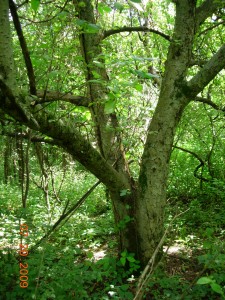
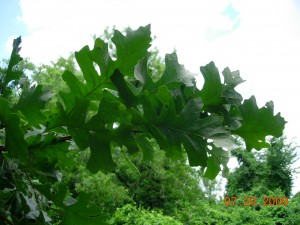
Bur oak at Colony Farm Orchard.  Photo by Richard Brewer

Bur oak at Colony Farm Orchard. Photo by Richard Brewer

There are of course the other beneficial effects of buffering against the noise, noxious fumes, and bright artificial lights coming from US-131 and the commercial land beyond it.

3. Threats to Conservation Land Elsewhere in Michigan. The Colony Farm Orchard has a protective conservation covenant that many Kalamazoo residents now know by heart: “The conveyance shall provide that Western Michigan University may utilize the property solely for public park, recreation, or open space purposes, except that the legislature, by statute, may authorize Western Michigan University to utilize the property for some other public purpose.” The restrictions were placed on the land by the legislature at the time of its transfer from the state to WMU in 1977.  If Representative Jones (D-Kalamazoo) and WMU can persuade the legislature to strip away this restriction, as  HB 5207 provides, and if Governor Granholm signs it, WMU will be able to use the land for anything.  This land, bought with taxpayer dollars and now designated for public use–specifically some variety of public open space–would be available to use as an Annex to WMU’s BTR park.  But it could also be used any other way WMU chose.

If HB 5207 is passed and signed into law, what state or university land dedicated for conservation–or any kind of public use–is safe?  What of the state parks? What of the arboretums, botanical gardens, and natural areas of the rest of the Michigan public universities?

What, in fact, of conservation easements?  These are now the most popular way to protect land in perpetuity, widely used by land trusts and government agencies.  They are discussed in many places in Conservancy: The Land Trust Movement in America but especially chapters 7 and 8.  Very briefly, a conservation easement is a binding agreement that permanently restricts the development and future use of land so as to protect its conservation values.  Conservation easements are held by conservation organizations or units of local, state, or federal government.  The easement holders are charged with defending against violations of the easement provisions. As of 2005, land trusts in Michigan held conservation easements on about 55,000 acres.  The amount of land in conservation easements held by government agencies is hard to determine but substantial.  Conservation easements are a relatively new way to conserve land, rarely used before 1960. Most states have statutes providing the legal foundation for conservation easements; Michigan’s is Act 451 of 1954, called NREPA.

But we have seen what the state legislature, or the House at least, has done with statutes in the case of the Colony Farm Orchard.  Suppose some well-connected land owner found that a conservation easement held by some land trust had become inconvenient to him.  Might the Michigan legislature be willing to pass a statute saying the conservation easement on his land was rescinded?  Maybe, maybe not.  Suppose that this situation came up two or three times.  Might the Michigan legislature decide that NREPA as currently written was becoming an unnecessary burden to worthy land owners who had changed their minds about the easements on their acreages.  In that case, might the Michigan legislature amend the statute to make backing out easier–like, for example, by coming to the legislature with what seemed like a good argument, such as using the land to create jobs?  Maybe, maybe not.

The land owners might still have a few hurdles remaining, with the IRS for example.  But that’s what attorneys and accountants are for.

If the legislature did either of these things, a judge or two or more would decide whether what the legislature did was legally OK.  Probably the judges wouldn’t say whether it was right or wrong or how much it damaged the cause of land conservation.

It is a dangerous path that Representative Jones and WMU are trying to steer the Michigan legislature towards.

A good time was had by all at the Save the Colony Farm Orchard Rally

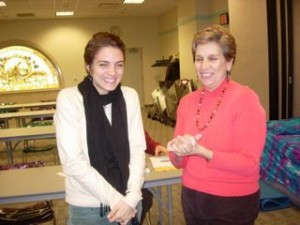
Chelsea Thorpe of the SSE and Sherry Sims, Secretary of ALPA.  Photo by Katy Takahashi.

Chelsea Thorpe of the SSE and Sherry Sims, Secretary of ALPA. Photo by Katy Takahashi.

The Save the Colony Farm Orchard Rally sponsored by the Asylum Lake Preservation Association was held Tuesday evening 8 November in Van Deusen auditorium at the Kalamazoo Public Library.  ALPA vice president David Nesius said that 53 people signed in and his total head count was 67.

One highlight of the session was a screening of Matt Clysdale’s fine documentary film “The Colony Orchard: Here We Go Again.”  The Here We Go Again refers to the fact that this all played out once before in the early 1990s, when Western Michigan University tried to include the orchard property in an earlier stab at a business park.  WMU was beaten back then, but the current attempt has yet to play out, so the film will need a second act, for which Matt continues to assemble footage.  (Contributions DSCN1928[non-deductible] to support the effort would be gratefully accepted.)
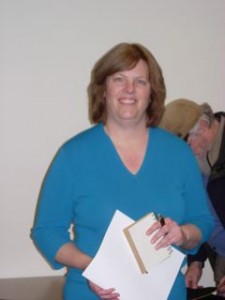
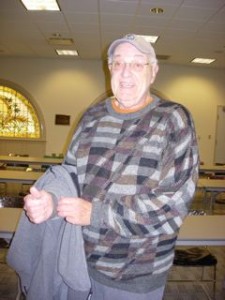
Curiously, in the filmed interview with Bob Miller, a WMU vice president well known for his conversations with the Asylum Lake neighborhood groups, Miller seems to be denying knowledge of the earlier conflict. That’s my impression; you can judge for yourself by watching the film on You Tube.

The film provides a quick and painless way to get the essentials of the current attempt by WMU to strip away the open space/public use restriction on the orchard, seemingly as a prelude to using it to expand its existing BTR Park. Included is the developing realization of WMU’s intentions and the early stages of the opposition to it.  This film was completed about the end of September.  The only updating really needed at the moment is that the original version of HB 5207 said that WMU was required to use the land to expand its BTR park.  That restriction is gone in the bill that reached the Senate.  Now, if the bill should pass, WMU can use the land for anything.

Amy DeShon, President of ALPA.  Photo by Katy Takahashi.

Amy DeShon, President of ALPA. Photo by Katy Takahashi.

The other highlight of the evening was the opportunity for attendees to ask questions and get answers to them, mostly from ALPA president Amy DeShon, but occasionally from others involved with planning the event and also from other members of the audience.  I didn’t count, but there must have been forty questions, plus as many comments in which attendees shared their ideas of what was happening and what ought to be done.

We heard a little about what the affected neighborhood groups are thinking and doing. Several students from the Students for a Sustainable Earth (SSE) at WMU were there.  They have adopted the Colony Farm Orchard question as a project.  Co-chairman Andrew Weissenborn told about their activities, some of which are listed on the Save the Enchanted Forest group page (under Events, on the left, and on the Wall) on Facebook).  Their hard work was warmly received.

Just after the film, I spoke for five minutes or so on the conservation values of the Colony Farm Orchard.  I was glad to have the opportunity to talk to somebody about conservation values, because WMU seems to find the subject uninteresting. When the subject of conservation comes up, they talk about what great things the BTR Park has done.

I don’t know yet how much media coverage the event got, but WMUK, the

Larry Ross of the Winchell Avenue-Oakland Drive Neighborhood Association.  Photo by Katy Takahashi

Larry Ross of the Winchell Avenue-Oakland Drive Neighborhood Association. Photo by Katy Takahashi

NPR station at WMU in Kalamazoo had a story on the early news Wednesday morning during Morning Edition.  I think it was good, but I wasn’t quite awake when it came on.  This was not, however, WMUK’s first coverage of the matter.  In September, they had a story about the House Commerce Committee passing the bill.

The Kalamazoo Gazette ran a front-page  article Wednesday by Paula Davis, who has covered the topic since it first came up.  Kalamazoo AM radio station WKZO also had a very brief story on the rally.

Another useful feature of the meeting was a hand-out sheet on what supporters of retaining the orchard property as public open space can do.  The version at the meeting by Lad Hanka was crisp and punchy.  I couldn’t quickly get it into this post, so I had to fall back on the following version.

What You Can Do
to Save the Colony Farm Orchard (=Enchanted Forest)

The bill passed the House after being introduced by and has been reported out of the Appropriations Committee in the Senate with Sen. Tom George (R-Kal) voting for it.  The only Senator on the Appropriations Committee who voted against it was Sen. Liz Brater (D-Ann Arbor).  The Senate has delayed taking it up for two months, perhaps partly in response to hundreds of calls and letters; however, it could be brought up at any time.

Contact key players in state government and educate them about the facts and your position on the stripping of restrictions from the Colony Farm Orchard in Bill 5207. Ask them either to keep the bill from being considered or to amend it to remove the section on the Colony Farm Orchard.  Ask them to vote against the bill if the Colony Farm Orchard provision remains. Phone calls, personal visits, and letters sent through the mail are most effective; however e-mails are also useful.  P.O. Box 30036, Lansing, MI 48909-7536 is the US Postal Service address for all Senators.

Senate Majority leader Mike Bishop controls the scheduling of bills. 517-373-2417. Senator Alan Cropsey, majority floor leader, works closely with Bishop in scheduling votes.  517 373-3760.

Senate Minority leader Mike Prusi should know how strongly the citizens of the Kalamazoo area feel about the bill. 517-373-7840 (Toll Free Phone Number: 866-305-2038).

Sen. Tom George (R–Kalamazoo has said he supports the bill and trusts WMU to do the right thing. He declined to meet with ALPA recently, saying he might have time in January. Separately, he also declined to met with the student representatives of SSE.  As the Senator from this district, the position he ultimately takes may be influential. 517- 373-0793.

Sen. Liz Brater has said she will oppose the bill. She deserves support.  517-373-2406.

Rep. Robert Jones (D–Kalamazoo) is the sponsor of HB 5207.  He could withdraw it or withdraw the section that involves the Colony Farm Orchard.  Let him know what you think. 888-833-6636.

Gov. Jennifer Granholm will need to make a decision to veto or sign  the bill  if it passes the Senate.  Let her know  your position.  517-373-3400, 517-335-7858.

WMU President John M. Dunn needs to be more aware of community sentiment than he now is:  john.dunn@wmich.edu, 269-387-2351, Office of President, Western Michigan University, Kalamazoo MI 49008.

Some WMU Board members may be somewhat isolated from Kalamazoo events. A letter or email to Board of Trustees c/o Secretary of the Board Betty Kocher, with the request that your complete message be distributed to every Trustee would probably suffice. Email: betty.kocher@wmich.edu

And it is still very much worthwhile to continue sending letters and Viewpoints to the Kalamazoo Gazette.  Go to   http://www.mlive.com/mailforms/kzgazette/letters/

DSCN1939

Big Rally to Save the Colony Farm Orchard/Enchanted Forest

ALPA, the Asylum Lake Protection Association, will hold the first general public meeting for discussion of the attempt by State Representative Robert Jones (D-Kalamazoo) and Western Michigan University to remove conservation restrictions on the Colony Farm Orchard.  The restriction placed on the land when it was conveyed by the state to WMU through the efforts of Bob and Jack Welborn (both R- Kalamazoo) states, “The conveyance shall provide that Western Michigan University may utilize the property solely for public park, recreation, or open space purposes, except that the legislature, by statute, may authorize Western Michigan University to utilize the property for some other public purpose.” WMU has stated that it plans to expand its BTR park onto this land located in Oshtemo Township.

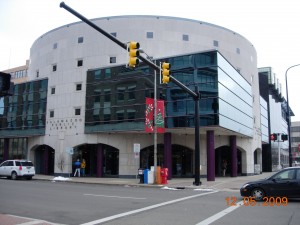
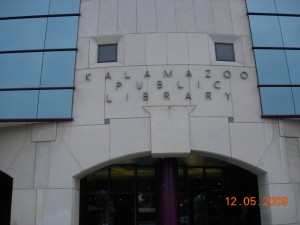
Downtown Kalamazoo Public Library, Site of 8 December 2009 Rally to Save the Colony Farm Orchard

Downtown Kalamazoo Public Library, Site of 8 December 2009 Rally to Save the Colony Farm Orchard

The meeting will be held Tuesday 8 December 2009 at 6:30 PM in the VanDeusen Room of the Kalamazoo Public Library (downtown Kalamazoo, 315 S. Rose St.).  Parking is available on nearby streets.  The program will include statements by concerned groups and individuals, a showing of Matt Clysdale’s documentary “Here We Go Again: Colony Farm Orchard” with new footage, a question-and- answer session, and information on how the concerned citizen can get involved.

Other Recent Developments

Something of the mood of the Kalamazoo public on the issue is shown by the Friday night (4 December) Viewpoint in the Kalamazoo Gazette by Holly Jensen. The Gazette headline was “Time to take a second look at donating to WMU.”

The Viewpoint takes a position against WMU selling the Orchard property to private developers.  It mentions an e-mail and letter-writing campaign by a WMU alum to other alumni and donors suggesting they reconsider future donations/endowments/bequests.  The article concludes: “Consider Scarlett O’Hara’s father’s conviction that land is ‘the only thing that lasts,’ because WMU has its ‘For Sale’ sign out.”

Another recent development that has come to my attention:  An attempt by ALPA to arrange a face-to-face meeting with Senator Tom George (R-Kalamazoo) was unsuccessful.  Senator George has stated his approval of the Colony Farm Orchard conversion and voted in favor of Representative Jones’s HB 5207 in the Senate Appropriations Committee.  The explanation for his unwillingness to meet with local citizens, either here or in Lansing, was that he was too busy.  It was suggested that ALPA could try again in January.

It may be of interest that the only member of the Senate Appropriations Committee who voted against HB 5207 was Liz Brater (D-Ann Arbor), who has probably the strongest record as a conservationist in either house.  Thanks to Liz Brater are in order from all those striving to continue the existing protection of the Colony Farm Orchard.DSCN3201

See you at the Rally!